Showing posts with label EoE. Show all posts

Thursday, September 5, 2013

Update: Nutritionist & Next Steps

We had a great visit with CHOP Nutrition this week.  Nutrition visits are always great - I often feel like our Nutritionist is the only at CHOP who actually listens to us, so those visits usually consist of my brain dumping all of my problems on Mimi while Aidan screams his heart out, because he hates that place.

As usual, I digress.

This week's visit was actually really great.  Last month, we all agreed to increase his feeds and see if that made him put on any weight.  This week, we found out that he gained almost an entire pound!  This is huge news!  He's up to 25lb 5oz (4.3%) and 33 1/4" tall (1.4%).  So he's still not huge - but he's growing.  We'll take it!

Mimi also worked her magic to get CHOP homecare to start delivering our formula - which NO ONE has done for us over the past two months that we've been asking for it.  So I'm pretty sure she's basically a magician.

Next steps:

Go see GI to discuss their thoughts on next steps.  When do we scope again?  Do we keep the lemonade even though he requires daily Miralax in order to be able to drink it?

Go see the new Allergist to discuss what might be a safe food to trial. This one scares the daylights out of me, and I have no idea what we're going to try. 

In prep for seeing the new allergist, I got all of Aidan's allergy records from both allergists we've seen (Allergy & Asthma and CHOP's EE Clinic).  Nothing special in the A&A file - they diagnosed him with soy enterocolitis when he was about 8 months old, and told us to reintroduce apples and bananas.  All of their skin testing was negative.  When he was 15m old, we did environmental testing, and he tested positive to grass, trees, weeds, and dust mites.  He'd also recently recovered from RSV, and had uncontrolled asthma symptoms.  He was started on daily pulmicort and zyrtec.

The CHOP file was a little more interesting.  He was there at 12m.  He was diagnosed at that time with IgE allergies to soy, peanut, and peas.  They also noted that he could potentially have FPIES (specifically in reference to milk and rice.  I don't know why those were singled out.)  This is interesting, since no one had ever uttered the word "FPIES" to us.  And I guess it doesn't really matter since he doesn't eat anything - so we don't have to worry about an FPIES reaction.  But it might have been nice to know we should be looking out for them?  Anyway, at 19m he was Patch Tested, and positive to eggs, milk, wheat, corn, barley, potato, beef, green beans, and peaches.  He was "equivocal" to rice, apples, and oats - however he has failed rice and apples based on symptoms in the past.  Chicken, pork, and turkey were negative.  Carrots were considered negative although I clearly saw a hive, so we agreed to disagree on that one.  They recommended starting food trials.  And that was our last visit.

So long story short, I have no idea what we'll trial but it's probably a good idea to get the ball rolling with this new allergist.

It feels good to have a plan.  Or a plan to make a plan.  Or at least someone who listens and cares about my kid.

Monday, October 1, 2012

Diagnosis: EGID

Like any child, Aidan underwent lots of tests and doctor's visits to get to a diagnosis of his EGIDs.  An upper GI was performed, to check for anatomical issues and problems like Delayed Gastric Emptying.  That involved everyone waking up BRIGHT AND EARLY and making the trek to CHOP Exton.  At this point, Aidan knows that being allowed to leave the house in pajamas is not a great sign.  It usually means procedure day. 


I hate how tiny and scared he looks here.  He actually did really really well.  This was taken right before they gave him barium to drink.  There were 2oz in the bottle and we were told he needed to drink at least 1/2 an ounce.  My little champ drank all 2oz and cried for more.

Once he finished the barium, we had to hold him down (while he screamed at the top of his lungs, and YES, we do bring earplugs with us) for xrays.

Aidan's Upper GI was blessedly normal.  It showed his reflux (we know) but nothing else.  No deformities, no DGE, nothing else of any concern at all.  What a relief - but not an answer.


Next, we scheduled a scope.  A "scope" for Aidan is really an upper endoscopy and a colonoscopy, both with biopsies.  Dr. Liacouras sends a camera in to examine his esophagus, duodenum, stomach, and colon.  While he's in there, he takes small samples from several places in each area and sends them out to be examined under microscope.  A child can look totally normal visually (Aidan did) but still have terribly high numbers of eosinophils (again, Aidan did).


Aidan's scope was done on December 14, 2011, when he was 11 months old.  The procedure went very well.  He had a blast in the waiting room and charmed all of his nurses.  He's the bravest kid I've ever seen, really.

And you can't tell me you've ever seen a kid who looks cuter in CHOP jammies!


As we all know, Aidan's scopes were not normal.  They were what led to his diagnosis of Eosinophilic Esophagitis (25 eosinophils per high powered field) and Eosinophilic Colitis (100+ eos per hpf).


This was what tied all of the pieces together.  The pain, the screaming, the reactions to food, the failure to thrive, the refusal to eat.  It all makes sense in light of what we now know.

I am thankful that we've found doctors who knew what to look for and how to help him.  I'm excited to move forward.  There may be no cure (yet!) but we will make his life better!

Monday, September 24, 2012

How are EGIDs diagnosed and treated?

How are EGIDs diagnosed?

Diagnosis of an EGID requires an endoscopy/colonoscopy and biopsies.  Visually, the endoscopy may show furrowing, thickening of esophageal folds, abcesses, white plaque, and other issues.  Alternately, it may show nothing.  Without a biopsy and a skilled pathologist, the right diagnosis cannot be made.

Aidan's scope was visually clear, but his biopsies showed very high numbers of eosinophils.

A pathologist will review samples taken throughout the digestive tract, looking for tissue injury, swelling, and thickening of tissue.


Once an EGID has been diagnosed, food allergy testing is usually recommended to guide treatment and/or food reintroduction.

Skin prick testing (SPT) to different foods is the most common method of allergy testing, but since EGIDs are caused by a delayed reaction, SPT is of limited use.

Aidan's SPT so far has shown allergies to peanuts, peas, and soy. 

Patch testing, which looks for delayed reactions, is frequently used with some success.  But it's not at all uncommon for a food that did not show positive on an allergy test to actually be an EGID trigger food. 


Aidan's Patch Testing has revealed allergies to milk, egg, wheat, rice, corn, oat, barley, potato, beef, green bean, carrot, peach, and apple.

So Then What?  How do you treat this??


There is no cure for EoE.  No cure for any of these EGIDs.  The goal is to control the flares and alleviate symptoms.  Treatments take two approaches - Diet and Medication.


Elimination Diet: Dietary restrictions are guided by food allergy testing. Some doctors recommend that the "top 8 allergens" (milk, egg, peanut, tree nut, soy, wheat, fish, shellfish) be removed from the diet, in addition to the foods that were identified via allergy testing.  When an elimination diet does not do enough to clear the GI tract of eosinophils (as evidenced by scope with biopsy), sometimes a stricter diet is needed. This may mean just removing some additional foods from your diet, or going directly to an elemental diet.

Aidan's failure to thrive was so scary that alongside his doctors, we chose to bypass the elimination diet altogether.

Food trials
involve adding back one food ingredient at a time while observing for a reaction.  Most doctors recommend that food trials not be started until symptoms have completely resolved and no eosinophils are seen in the biopsies (a "clean scope").  Methods vary, but patients are often scoped and biopsied after each food trial, which can last 2-3 months.  It's a slow process, and patience is really important.

Aidan has trialed (and failed) rice and flavored formula.  A trial (and a failure!) is pretty emotionally difficult, and we're in no rush to try again.  We will, soon, but not yet.  

Elemental diet consists of a prescription medical liquid nutrition without any food proteins whatsoever. Elemental formulas are made of amino acids (the building blocks of proteins), fats, sugars, vitamins and minerals.

Aidan drinks Neocate Jr (with a side of Calamari).


Elemental formulas are available in a variety of flavors, but they don't taste very good and patients often have a hard time drinking enough.  For those people, feeding tubes can help avoid malnutrition and failure to thrive.

Aidan was ultimately given a feeding tube for just this reason.

Medications for EGIDs generally involve steroids to control inflammation and suppress the eosinophilic reactions. Steroids are normally used only if dietary changes do not resolve the symptoms. Side effects from steroids often limit long-term use, and without removing the cause of the symptoms via dietary restrictions, the eosinophils will return once the medication is discontinued.

Aidan did try a steroid, but it didn't work out well for him.  Your mileage may vary.
 
Many patients (Including Aidan) are also on high-dose proton pump inhibitors (PPI's) like Prilosec.  This helps control the reflux symptoms that can also be the cause of failed scopes.


Next week - Aidan's tests and diagnosis!

Monday, September 17, 2012

What is EoE?

It all starts with the eosinophils.  An eosinophil is a type of white blood cell that helps our bodies fight off infections.  Eosinophils are present in our bodies for a number of reasons, including food/environmental allergies, infections, parasites, leukemia, and other medical issues.  One such issue is Eosinophilic Esophagitis.

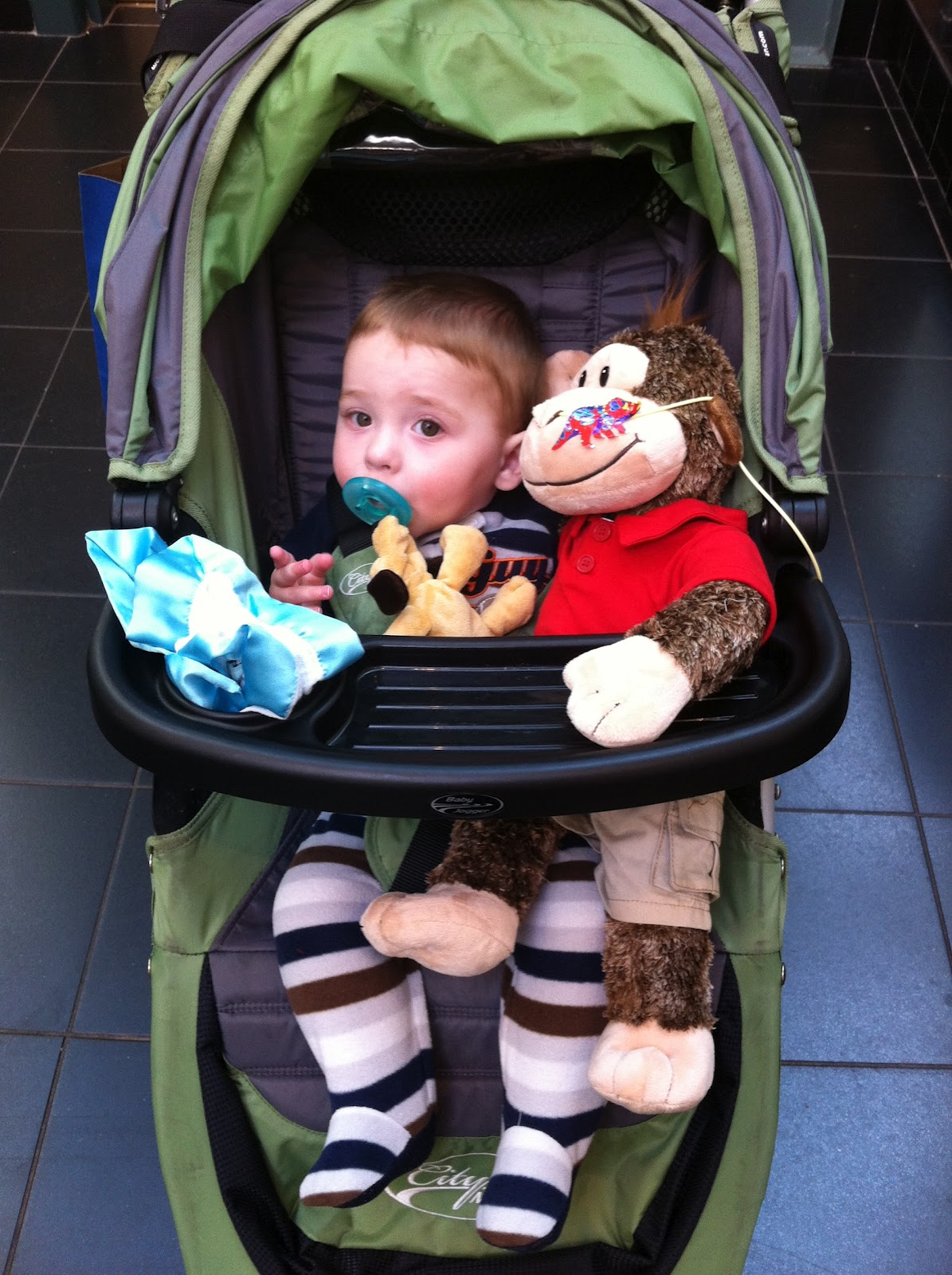
Why is this thing smiling??


Eosinophilic Esophagitis (EoE) is an allergic inflammatory disease characterized by increased numbers of eosinophils in the esophagus.  In a healthy person, there are no eosinophils present in the esophagus.  But in a patient with EoE, the esophagus can be teeming with them.  These eosinophils can cause irritation and damage, and often quite a bit of pain.

EoE is the most common of the Eosinophilic Gastrointestinal Disorders (EGIDs), but it's not the only one.  When the eosinophils present themselves in the stomach, it is called Eosinophilic Gastritis (EG).  In the stomach and small intestine, it's called Eosinophilic Gastroenteritis (EGE).  In the colon/large intestine, it's Eosinophilic Colitis (EC).

Some recent studies at Cincinnati Children’s Hospital have shown that Eosinophilic Esophagitis is even more common than more well-known GI diseases like Crohn's and Cystic Fibrosis.


The most common symptoms of EoE include:
  • Reflux that does not respond to medication
  • Difficulty Swallowing
  • Food impaction in the esophagus
  • Nausea and Vomiting
  • Poor Growth or Weight Loss
  • Malnutrition
  • Abdominal or chest pain
  • Poor appetite and refusal to eat
  • Difficulty sleeping due to pain or nausea

 The most common symptoms of lower-GI EGIDs (EG, EGE, EC) include:
  • Nausea or Vomiting
  • Diarrhea
  • Poor Growth/Weight Loss
  • Abdominal or chest pain
  • Reflux that does not respond to medication
  • Difficulty swallowing
  • Food impactions
  • Gastroparesis (Delayed emptying of the stomach)
  • Anorexia/Poor Appetite
  • Bloating
  • Anemia
  • Blood in the stool
  • Malnutrition
  • Difficulty sleeping

It's a lot to deal with - but a diagnosis is the first positive step toward feeling better.

(Big thanks to NJPAEOS for this information!)

Next week - how do you diagnose an EGID - and THEN what?

Tuesday, May 1, 2012

Update: April 16th - GI

This is a short update, because there's not too much to say.  It was a fairly uneventful visit with GI - we are always rushed in and out so quickly with very little chance to talk.

Dr. Liacouras again confirmed that the scope results were good (I really want a copy of that report), that we're doing the right thing, and that we now need to just sit back and watch him grow.  We're happy with the tube decision, though Dr. L feels that we should continue with the NG for another 2-3 months before considering the G-Tube.

We'll see about that... There's a call into his office to discuss that timetable...

The bright spot of the day?  We met up with a sweet little girl named Rylee in the waiting room.  Rylee is a Super Tubie too!  She was wearing a turtle sticker on her cheek, and for the first time since Aidan became a tubie, I was able to see myself on the other side of the table.  She didn't look sick.  I didn't feel sorry for her.  She looked beautiful and strong and healthy and brave.  I hope that's what someone, somewhere sees when they look at Aidan.

Thursday, April 26, 2012

Update: April 4th Scope & Biopsies

A few weeks ago, Aidan had his second scope.  The first scope took place on December 14th and showed lots of eosinophils in his esophagus and colon.  We were hoping for better this time.  Aidan had been almost entirely elemental for the past seven months (minus one very very sad rice trial), so hopes were high.

The morning began with a very early wakeup.  I packed a sleepy, confused baby bug into the car, tucked him in with his blankets, and hoped that he fell back asleep (nope).  We arrived just as CHOP Exton opened - we were the first patients in the door that morning.  We were taken directly back to the pre-op waiting room, where Aidan changed into his CHOP jammies and we played.


As nerves began to set in (mine, not his!), I gave Aidan his beloved balloon (Ballooney!) and his beloved Tubie Friend (Toby!) and we waited to be called back.  We didn't have long to wait - Dr. Liacouras starts his day bright and early.

We soon found ourselves in the back, having vitals taken and being chatted up by the anesthesiologist.  We argued back and forth for a while about whether Aidan was well enough for the procedure - ultimately we agreed that he was - and were finally given the all-clear for the Versed.  Versed is the happy juice that children at CHOP get before a procedure.  It makes them a little silly, a little sleepy, and totally willing and happy to wave bye bye to mommy and be taken off to places unknown with a strange nurse.

Aidan went from happy to sleepy to zoned out to almost totally asleep within about ten minutes.


Around this time, the nurses told me that they were ready to take him back.  I was left in the pre-op waiting room, thinking about him and hoping that things went well.  He was in excellent hands, I know, but it's always a bit nerve-wracking to see your child put under anesthesia.

Less than thirty minutes later, Dr. Liacouras came out to let me know that he did wonderfully.  Things were visually "beautiful" and we'd have more results in about a week.

A few minutes later, I was brought back to see my sleeping beauty, who took his time waking up and didn't exactly come out of it smiling.  Waking up from surgery is always tough, isn't it?

I have so much love and affection to the nurses at Exton.  They treat us as though we're the only patient there that day (which is FAR from the case).  By the time Aidan left, he was all smiles and flirts.  Toby Tubie was feeling pretty good too :)


Several days later, we got the call from Dr. Liacouras.  Somehow, we've made the right decisions, because HIS SCOPE WAS NORMAL!!!  What this means for us is that now we know that he has the ability to feel good.  We have a good baseline for our future food trials.  This is really exciting news!!!

Monday, March 19, 2012

When will he get better?

Variations on this are probably the second most often asked questions (right after "Uh, so, what's wrong with him anyway?").  Will he ever get better?  When??  He'll outgrow this, right? Oh, is that all still going on?

The thing is, EGIDs are still "new" disorders.  They began to be diagnosed (sparingly) in the 1980's.  The incidence has increased rapidly since then, but it's still relatively rare and the long-term data just isn't there.  Further complicating things is the fact that what little research that is being done, is being done on Eosinophilic Esophagitis.  Not that this is a bad thing - it's the most common of the very rare EGIDs - but it's only part of the puzzle for Aidan, since his colon is affected as well (and is actually generally in worse shape than his esophagus.).

There have been several studies done to try to analyze the limited data that is available, and what seems clear from my "research" (Googling is research.  Shut up.) is that few patients have shown complete resolution of the disease.  Most patients show that the disease persists, but that some triggers may be outgrown.

The important piece to note is that there are no studies showing that EGIDs limit life expectancy.  Furthermore, although this is a frequent worry of many EGID parents, no good link exists between EGIDs and cancer of the esophagus.

There are some complications of EoE that we are aware of and will look out for.  EoE patients can develop strictures (narrowing of the esophagus), making swallowing difficult and often leading to food impaction.  There's not much information out there about complications of EC, but Aidan has a fantastic team of doctors working tirelessly to keep him well.


Soooo, to answer your questions:  Yes, he will get better.  If I told you when, I'd be making it up.  No, he probably won't outgrow this.  And yes, I'm sorry to say, this is still going on. 


What does all of this mean to us?

We anticipate that Aidan will develop a list of safe foods, and that it will grow over time after we get some successful food trials under our belt.  Food trials are a long, slow process, so please don't be shocked when you ask and we tell you that he's still not eating.

We are confident that Aidan will figure out what's going to be normal for him, and he'll lead a long, happy, non-food-centered life.

Don't you worry about me...  I'm going to be just fine :)

Sunday, February 26, 2012

What's wrong with him, anyway?

Here's the zillion dollar question.  What's wrong with him?  


The short version:
Aidan has an eosinophilic gastrointestinal disorder (EGID) that involves his esophagus (Eosinophilic Esophagitis - abbreviated EE or EoE) and his colon (Eosinophilic Colitis - EC).  He also has environmental allergies, potentially life-threatening food allergies and Gastroesophageal reflux disease (GERD).  He also has Reactive Airway Disease.

Um...  What?
I know.  It's a lot.  It's a lot to read, and don't even get me started on living with it.   But we do (and "we" is a very broad word.  "We" are a team that includes Mommy and Daddy, friends, family, teachers, doctors, nutritionists, pharmacists, and online strangers whose kids have these problems too.) and we do it well.  See, I mentioned the EoE, the EC, the food allergies, the reactive airway, and the GERD.  But what I haven't mentioned yet is vastly more important.

Aidan has all of the issues above, but he also has a severely infectious laugh, an independent streak a mile wide, and a bigger smile than I've ever seen on a 1 year old, bar none.

Mommy wasn't kidding about that smile...


Let's take it one step at a time...


Food Allergies
Nowadays, most of us know someone with food allergies.  "Food allergies" can mean so many things.  Some reactions are scarier than others, but it's really important to know that a past reaction isn't a great indicator of a future one.  Yesterday's soy-related eczema flare-up could be tomorrow's anaphylaxis.  It's so, so important to be vigilant and careful, especially when dealing with small children who can't articulate how they feel.

In Aidan's case, the line between his food allergies and his EGIDs is a really hazy one.  We do, however, know that he is definitely allergic to peanuts, peas, and soy.  They are severe allergies with potentially life-threatening consequences.  We carry epi-pens for him, and are thrilled beyond thrilled to show and teach others about how to use them.  We carry a trainer pen everywhere with us and have given one to his daycare so that they can all practice using it.

There is also a list of "suspected" allergies that haven't shown positive on his last round of testing, either because we didn't test for it, it was a false negative, or he truly isn't allergic.  Those things include eggs, milk, and red dye (hello, random).  Further testing in the future should help us get to the bottom of these foods (but that's another post, for another time). 

Contact with these allergenic foods (even on his skin) can cause hives, swelling, red/itchy/watery eyes, itchy/runny/stuffy nose, itchy/swollen mouth, trouble speaking, trouble breathing, shortness of breath, rapid breathing, coughing, wheezing, vomiting, abdominal pain, nausea, diarrhea, agitation, weak pulse, anxiety, or loss of consciousness.  Obviously some of those look a little scarier than others (trouble breathing?  loss of consciousness?  Eek!) but for someone young and unable to advocate for himself, it can be hard to tell when he's really in trouble.  What looks like coughing can actually be a child struggling to breathe.  A child making "funny noises" may in fact be wheezing.  And how does a 1 year old indicate that his tongue is swelling or his mouth is itchy?

It's serious business, food allergies.  Not for the faint of heart.  And the very scariest thing?  Many people don't even know they have a food allergy until after a serious reaction occurs.

So if you hang out with us, be ready to be shown the business end of an epi-pen.  Be ready to use it.  If you have questions, ask them.  If you still don't understand, ask again!  This little guy counts on all of us to keep him safe.


GERD
This one's a lot more straightforward.  I actually know few babies that don't have some reflux in their first year of life.  Aidan's no exception here, and continues to be treated with a high dose of a Proton Pump Inhibitor (Prilosec) twice a day.  His medicine has to be compounded for him, we really wish our insurance would pay for this, but what can you do?  Any parent dealing with feeding issues would agree that whatever keeps food in the tummy is worth its weight in gold.


EGIDs
Ah, here we are.  This is the reason you came, I know.  The ever-mysterious Eosinophilic Disorders.  There will be many, many posts in the future explaining more about this, so I'll go with a short version for now.

Inside everyone's body are white blood cells called eosinophils.  They're super important because they help fight off nasty infections (including parasites).

In Aidan's body, the eosinophils are a bit confused.  They hang out in his esophagus and colon whenever he eats because they think food is a parasite.  They do what any good parasite-fighter would do - attack!  Unfortunately, there aren't any parasites around(I promise, we checked), and so they attack the food instead (and it's awfully hard to grow when everything you eat gets attacked before you can digest it!).  Once the food is gone, they attack the inside of his body (and this hurts, a lot.).

What this means for Aidan on a daily basis is that he can't eat.  Not that he can't eat some things.  He can't eat anything.  You know how helpful it is to distract your kid with cheerios, or bribe him with a cookie?  I don't. (But I hear it's grand.)

It's a full time job keeping food away from a toddler.  Just ask his teachers! 


Reactive Airway Disease
Reactive Airway is a way of describing how Aidan's body reacts at certain times.  It might or might not indicate asthma later on.  At the moment, it indicates that Aidan frequently coughs, wheezes, and struggles to catch his breath, especially when he's sick.  He is treated at home and at school with albuterol in a nebulizer, and he's surprisingly good about taking the treatment.

At this point, Aidan's too young for reliable diagnosis of asthma.  At his age, we call his collection of symptoms "Reactive Airway" and keep an eye on it.


So that's what's "wrong" with him.  It's my sincere hope that those of you who know him have just as much to say about what's "right" with him too.  He's a fantastic kid, he just needs a little bit of extra care to keep him safe and healthy.

There will be lots more to say about all of this in future posts, including how we got here and where we're going next, but this seemed a reasonable place to start.  Feel free to ask questions.  Thanks for listening.  Thanks for caring.